Problems
Flat out is not the same as getting ahead.
Busy does not mean profitable. Busy does not mean steady. And a business that only runs when you're on the tools is not a business you own — it's a job you can't leave.
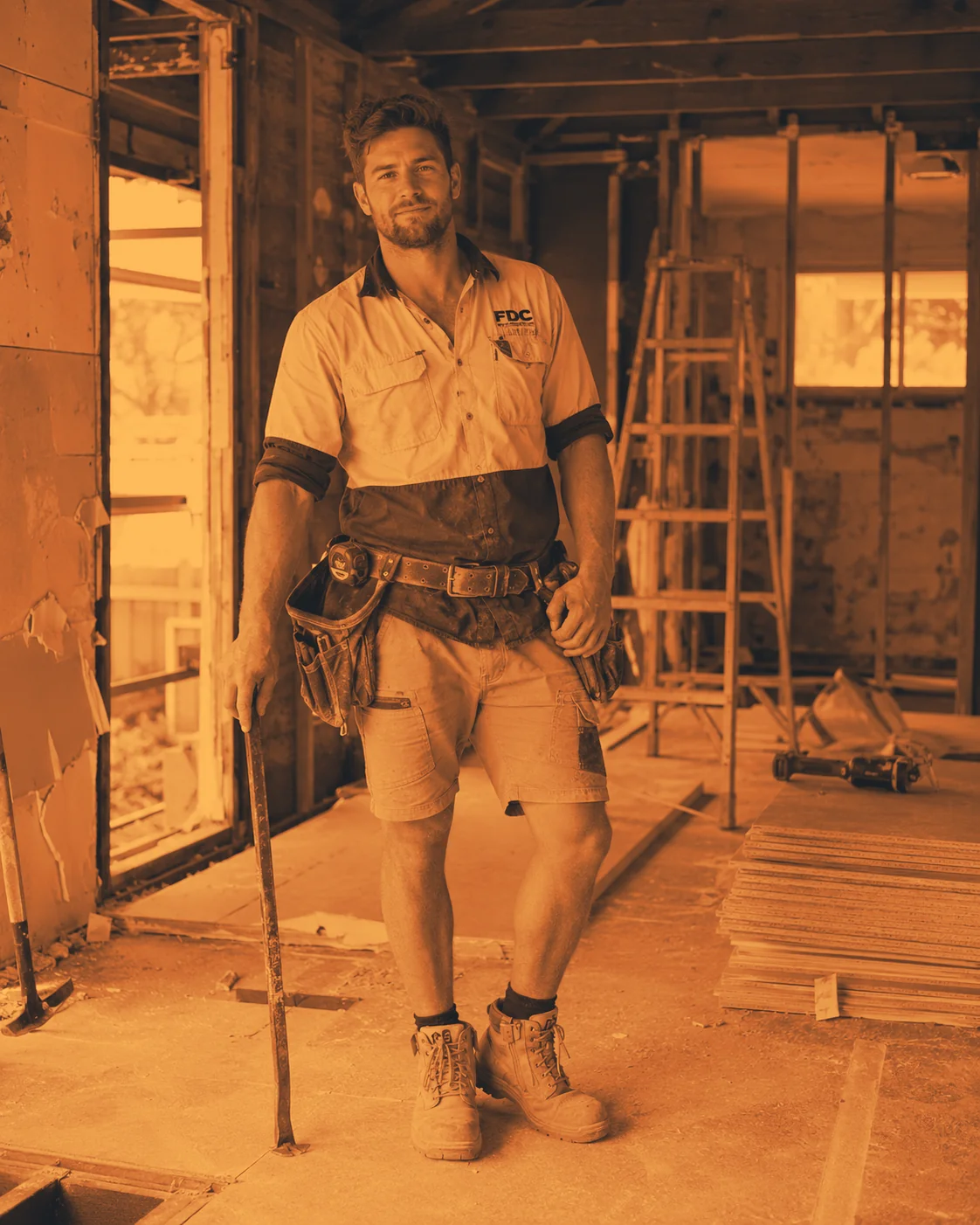
What the research showed
Burnout and the gap between effort and progress was one of the strongest themes across more than 2,400 tradie accounts. It bites hardest right at the edge of capacity — flat out, work coming out your ears, and still not getting ahead.
"Just me and one qualified bloke looking after all our domestic work, haven't finished on time the past couple of weeks, and generally feeling useless."
An operator, from the tradie research.
That's not a work-rate problem. It's a business with no way to run without you standing in the middle of it.
Where it actually breaks
Every quote, every question, every "can you just come and look" — it all routes through you. You're the estimator, the salesperson, the quality check and the follow-up, on top of being on the tools. The business can only grow to the size of what you can personally hold in a day.
Putting on another set of hands helps the workload — one operator went from costs up about thirty percent to income quadrupled — but the selling, the trust and the follow-up still live in your head. Add work and you add hours, not freedom. That's the real ceiling: not the number of jobs, but the fact that you are the only part of the business that can win one and reassure the customer.
First fix
Build the machine that sells while you're on site.
The fix isn't more hours or hiring your way out of it. It's building the selling and the trust into a system that runs whether you're on the tools or not — the quote that sells itself, the proof the customer finds before they ring, the follow-up that goes out without you touching it. Built once, in your voice, run by the business instead of carried by you.
See what buyers find before they call.
The Visibility Check scores your Google presence across the signals buyers actually use. Free. Takes 30 seconds.